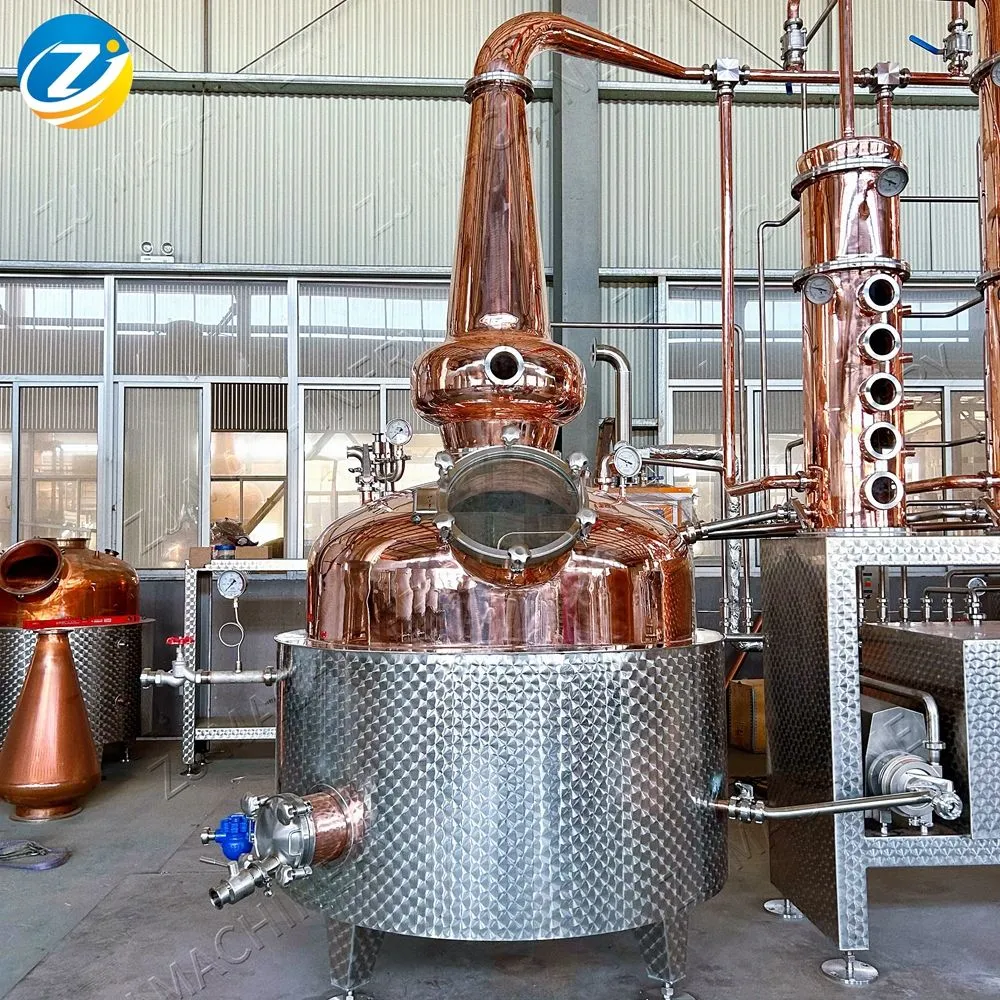
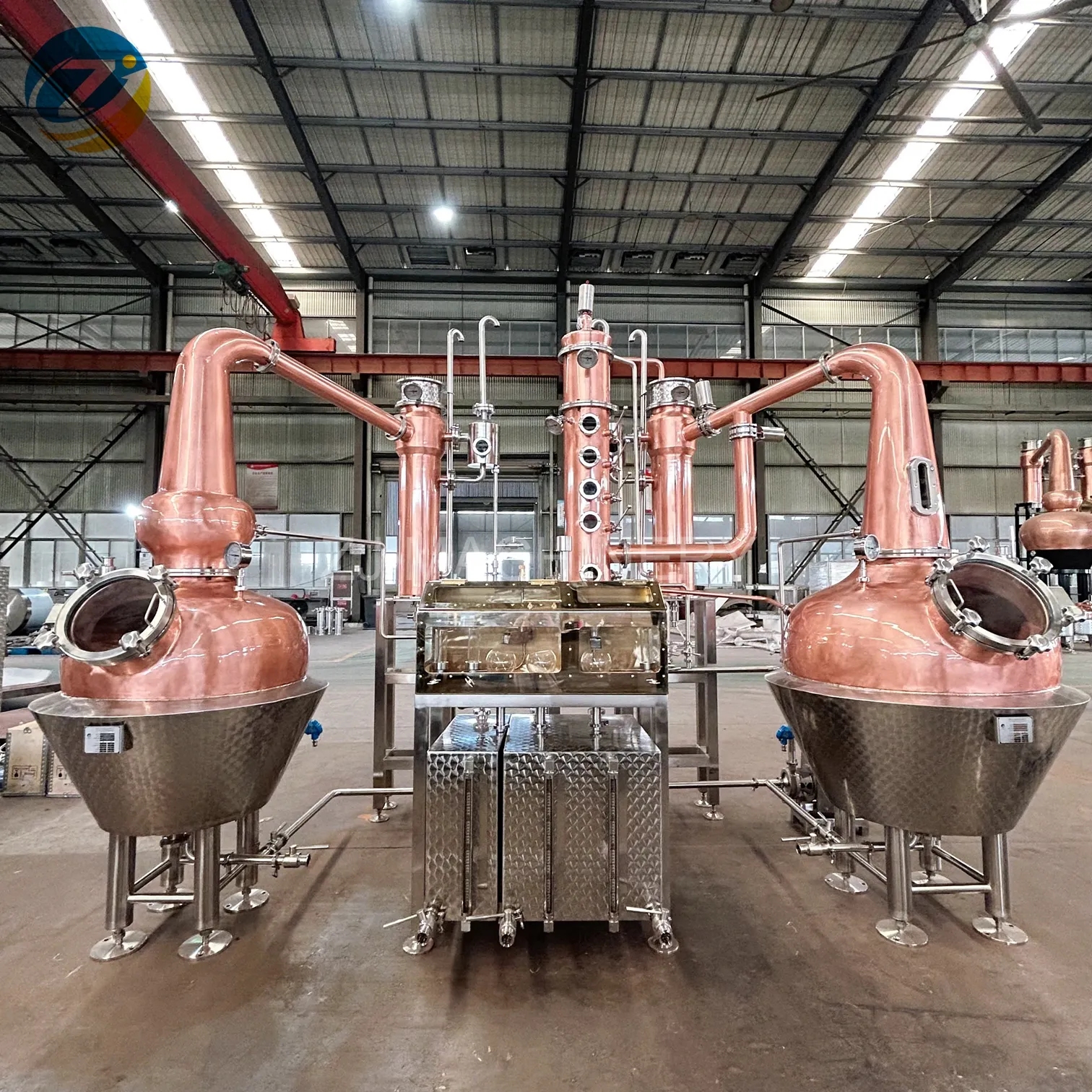
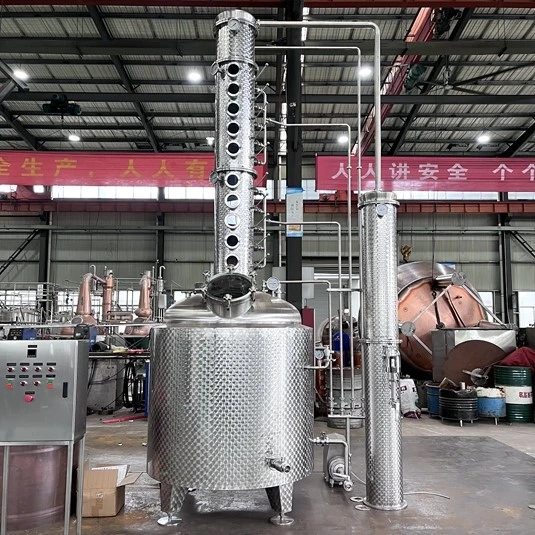
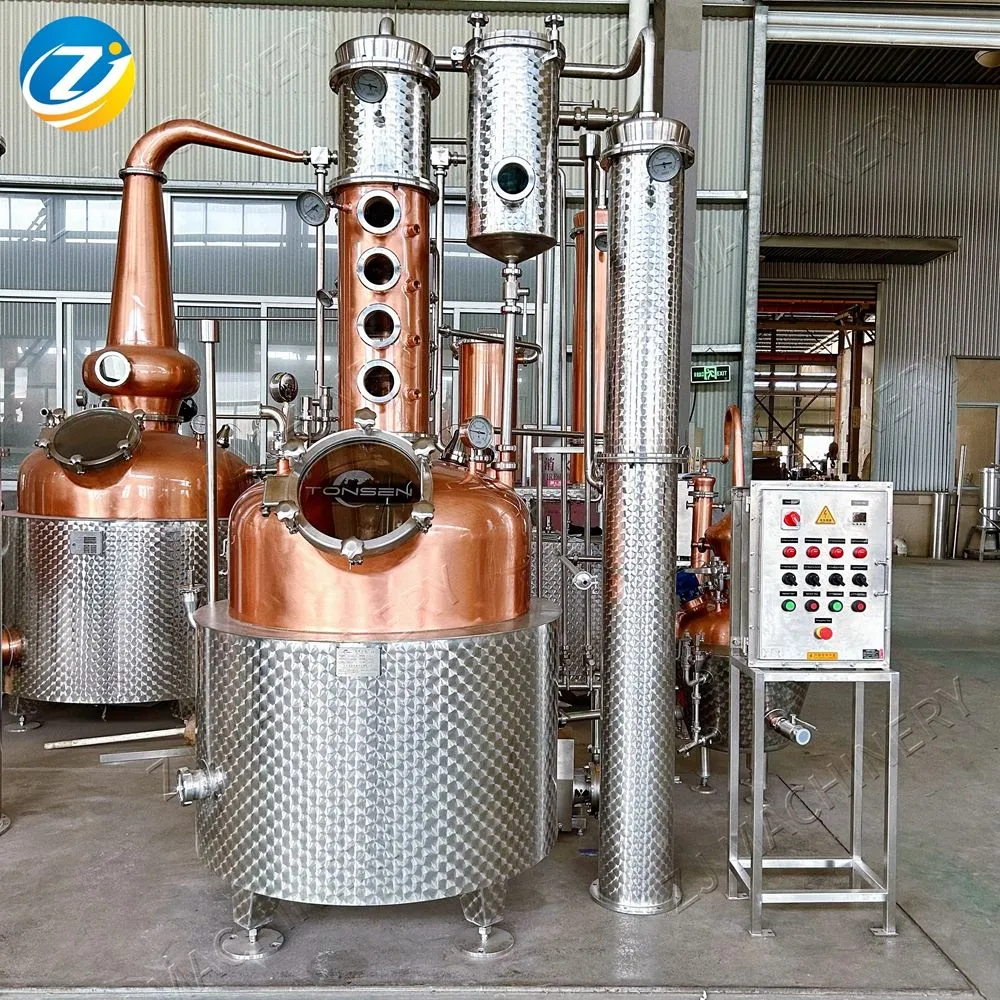
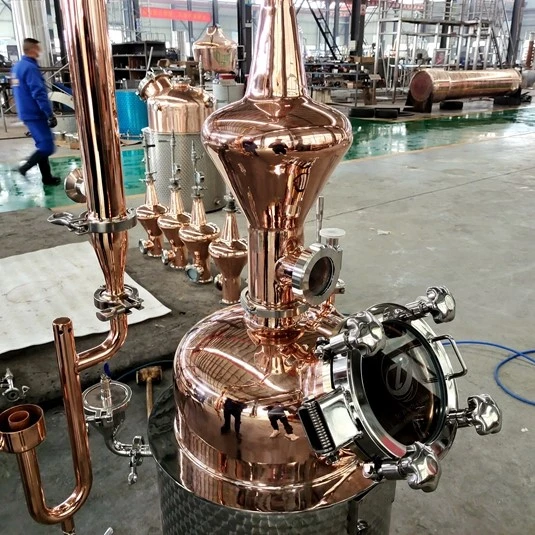
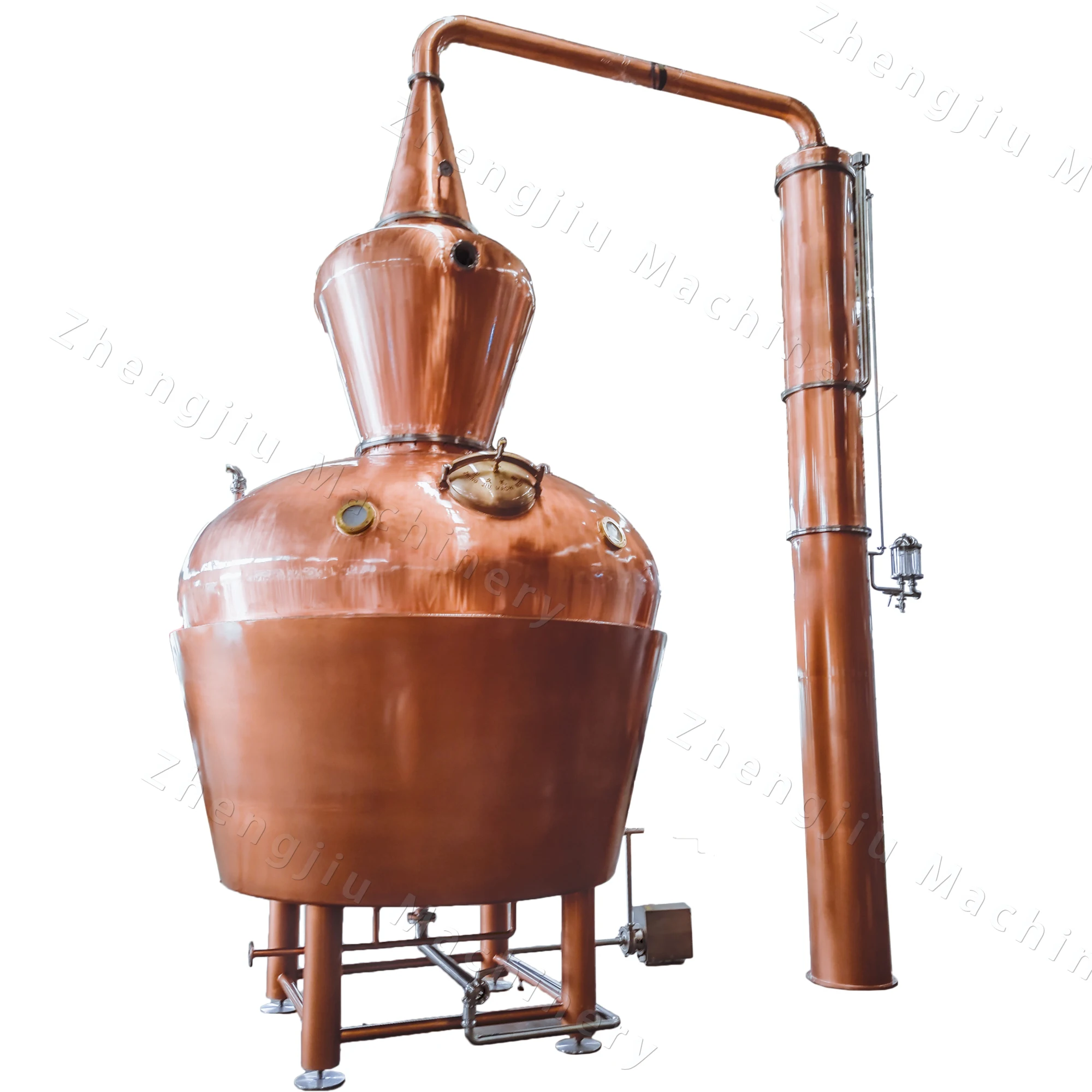
Selecting the right still requires more than choosing a vessel based on its nominal capacity. A commercial copper pot still tequila system must match the fermented mosto volume, daily production target, available utilities, operating schedule, and desired spirit character.
The usable charge is normally lower than the total pot capacity because sufficient headspace is needed for vapor expansion and foaming. Heating power, condenser performance, reflux behavior, cleaning access, and future expansion should therefore be evaluated together.
Calculate Copper Pot Still Tequila Batch Capacity
Begin with the amount of fermented mosto that must be processed each day. Key factors include:
Mosto volume per fermentation batch
Alcohol content entering the still
Number of operating hours per day
Planned stripping and spirit runs
Heating, unloading, and cleaning time
Expected annual production
A tequila still should not normally be filled to its full nominal capacity. Depending on the liquid composition and foaming tendency, the practical charge may be approximately 70% to 80% of the vessel volume.
For example, a 500-liter pot may process roughly 350 to 400 liters per run. If a distillery needs to process 1,200 liters of mosto each day, it may require three or four runs.
| Nominal Pot Size | Illustrative Charge Volume | Typical Application |
|---|
| 100 L | 70–80 L | Testing and recipe development |
| 200 L | 140–160 L | Small craft production |
| 500 L | 350–400 L | Growing commercial distillery |
| 1,000 L | 700–800 L | Higher-volume batch production |
These figures are general planning references. The final filling level should be confirmed according to the mosto composition, vessel shape, and heating intensity.
Plan Tequila Still Capacity for Stripping and Spirit Runs
Pot-still production commonly uses two stages. The first stripping run concentrates the fermented mosto into an intermediate distillate. The second spirit run separates the heads, heart, and tails while refining flavor and alcohol strength.
A distillery can use:
One pot for both stages
A larger stripping pot and a smaller spirit pot
Two pots operated on a staggered schedule
A pot still combined with a rectification section
Using one vessel reduces the initial investment but may limit daily capacity. A two-pot arrangement can improve production efficiency because one still can begin a stripping run while the other is prepared for spirit distillation.
Still size should therefore be calculated according to the complete weekly workflow, not only the volume of a single batch.
Which Heating Method Works Best for Tequila Stills
The heating system influences warm-up time, process control, installation requirements, and the risk of scorching.
| Heating Method | Main Benefit | Main Consideration |
|---|
| Steam jacket | Even heating and responsive control | Requires a boiler or steam supply |
| Electric heating | Relatively simple installation | Heating elements must be correctly sized |
| Thermal-fluid or hot-water jacket | Gentle indirect heating | Usually has a slower heating rate |
| Direct fire | Traditional operating method | Requires strict fire and ventilation controls |
Steam-jacket heating is frequently used for commercial tequila stills because it distributes heat over a larger vessel area and avoids direct contact between heating elements and the fermented liquid.
Electric heating may suit smaller facilities without steam infrastructure. However, residual agave solids can increase the risk of localized overheating, so the heater arrangement and cleaning access must be carefully designed.
Heating power must also match the pot capacity. Insufficient power increases warm-up time and reduces the number of daily runs. Excessive heating may create sudden boiling, unstable vapor flow, and difficult fraction control.
Determine the Required Reflux Level
Reflux occurs when part of the vapor condenses and returns to the still instead of continuing to the product condenser. It affects alcohol purity, aroma retention, and spirit body.
Passive reflux is influenced by:
A taller head and upward-sloping vapor path generally increase reflux and produce a lighter spirit. A shorter or downward-sloping route allows more heavy compounds to reach the condenser, contributing to a fuller flavor.
Active reflux control can be added through a dephlegmator or rectification column. This provides greater control over alcohol strength but may remove some aromatic compounds when used too aggressively.
The appropriate setup depends on the intended product. A traditional agave spirit may use a simple copper pot with moderate passive reflux, while a cleaner style may benefit from adjustable cooling or a short rectification section.
Match a Tequila Still with the Condenser and Utilities
A correctly sized pot still requires a condenser capable of handling the planned vapor output. An undersized condenser may cause unstable operation and insufficient cooling.
Before evaluating a tequila distillery for sale, buyers should confirm:
Steam pressure or electrical supply
Cooling-water temperature and flow rate
Drainage and wastewater capacity
Workshop height and equipment access
Ventilation and safety requirements
Fermentation and collection tank capacity
Cooling conditions are particularly important in warm regions. A closed-loop chiller or cooling tower may be required when the available water cannot maintain a stable condensation temperature.
The collection system should also support safe sampling and fraction separation. Thermometers, inspection ports, pressure protection, accessible valves, and a parrot outlet can improve daily operating control.
Consider Cleaning and Future Expansion
Still capacity should support future production without creating inefficient partial batches. Choosing a vessel that is far larger than the normal charge volume may increase heating time and reduce process consistency.
Cleaning access is equally important. Properly positioned manways, drains, removable components, and CIP connections can shorten turnaround time between runs. Copper surfaces should be inspected and cleaned regularly to maintain hygienic operation and effective heat transfer.
Zhengjiu Machinery supplies copper and stainless-steel distillation systems in different capacities. The configuration can include a boiler, onion head, condenser, parrot outlet, supporting tanks, and customized heating or reflux components.
FAQs
What size tequila still is suitable for a small distillery?
The appropriate size depends on the daily fermented mosto volume, usable filling level, number of planned runs, and available operating hours. We normally calculate the still capacity together with fermentation output, heating time, cleaning time, and future production plans.
Why is a tequila still not filled to its full nominal capacity?
A pot still needs sufficient headspace for vapor expansion and foam control. The practical filling volume depends on the fermented liquid, solids content, vessel geometry, and heating intensity, so the usable capacity should be confirmed for the actual production process.
Is copper necessary for tequila stills?
Copper contact can help remove unwanted sulfur compounds and support the development of a cleaner spirit profile. A tequila distillation system may use full-copper construction or combine copper vapor-contact sections with stainless-steel structural components.
Can one tequila still handle both stripping and spirit runs?
Yes. One vessel can be used for both stages, which may suit smaller production schedules. A two-still configuration can improve throughput by allowing stripping and spirit distillation to be organized more efficiently.
Which heating method is best for a copper pot still tequila system?
Steam-jacket heating is commonly selected for commercial production because it provides even and controllable heat. Electric or other indirect heating methods may also be suitable depending on the still capacity, available utilities, and solids content of the fermented mosto.
What information is needed before requesting a tequila distillery for sale?
Please provide the mosto volume, alcohol content, daily production target, preferred distillation stages, available heating source, cooling-water conditions, workshop dimensions, and required automation level. We use this information to determine the pot size, condenser, vapor path, and supporting equipment.
Conclusion
Sizing a pot still requires coordinated planning of batch volume, usable filling capacity, stripping and spirit runs, heating power, condenser performance, and reflux control. Utilities, cleaning time, workshop conditions, and future expansion must also be considered before the equipment specification is finalized.
Zhengjiu Machinery can customize the tequila still capacity, material, heating system, vapor path, condenser, and supporting equipment according to the required output and spirit style. Providing the mosto volume, daily production target, available energy source, cooling conditions, and workshop dimensions will help determine a suitable configuration.