Producing whisky, rum, gin, and cleaner high-proof spirits in one facility can create an equipment-planning challenge. Each product requires a different balance between flavor retention, reflux, alcohol concentration, and botanical handling. Installing separate stills for every spirit increases floor-space requirements, utility connections, and capital costs.
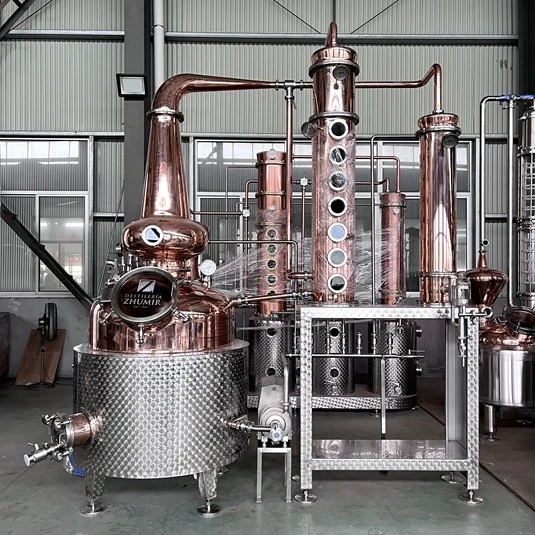
A properly configured hybrid still combines a batch pot with a rectification column and controllable vapor routes. Distillers can use the pot alone for fuller-flavored spirits, direct vapor through selected plates for additional purification, or connect optional components such as a gin basket. This flexibility makes hybrid equipment suitable for craft producers planning several products around one production platform.
Plate Column Configuration for a Flexible Hybrid Still
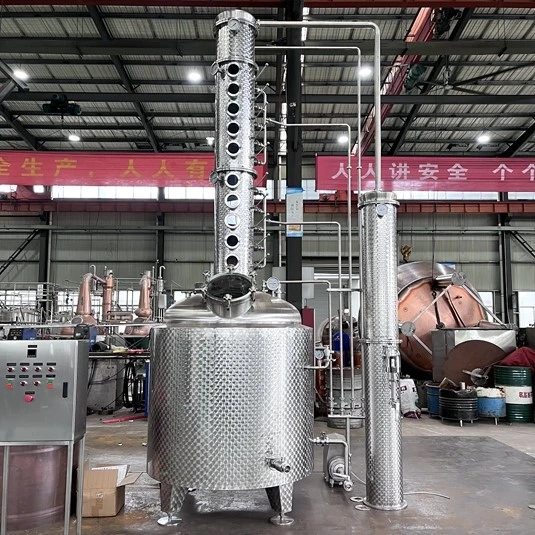
Column plates create repeated vapor-liquid contact. As vapor rises through each active plate, part of it condenses and is redistilled, increasing reflux and separation.
The required number of plates depends on the intended products:
| Production Goal | Typical Operating Approach | Main Result |
|---|
| Full-bodied whisky or rum | Pot mode or limited plates | Greater retention of heavier flavor compounds |
| Brandy or lighter whisky | Moderate plate engagement | Balanced aroma and alcohol concentration |
| Gin base spirit | Moderate or higher reflux | Cleaner base before botanical processing |
| High-proof spirit | More active plates and controlled reflux | Greater purification and higher output strength |
More plates do not automatically mean better spirit. Excessive rectification can remove congeners that contribute to the character of whisky, rum, and brandy. Distilleries should therefore select a column according to their actual recipes instead of simply ordering the tallest possible configuration.
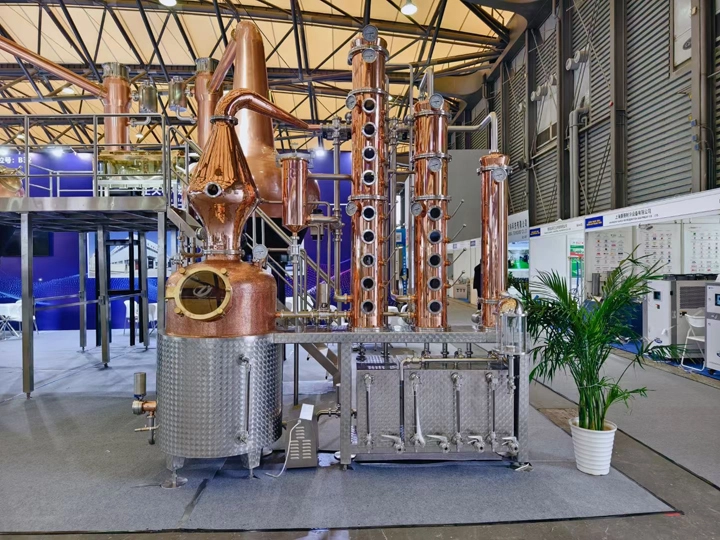
A modular plate column can provide additional flexibility. Individual sections may be added, removed, or isolated when production requirements change. Sight glasses also allow operators to observe plate loading, bubbling behavior, and vapor stability during a run.
Bypass Valves Create Multiple Hybrid Pot Still Vapor Paths
One of the most useful features of a hybrid pot still is the ability to redirect vapor through different process routes.
A diverter-valve system may provide several operating modes:
Pot-still mode: Vapor travels directly from the pot head to the condenser, avoiding most or all rectification plates.
Column mode: Vapor passes through the plate column before reaching the condenser.
Partial-column mode: Only selected plates or column sections are used.
Botanical mode: Vapor is routed through a gin basket before final condensation.
Combined mode: The pot, plates, reflux condenser, and botanical section are used in a planned sequence.
Pot mode is generally suitable when the objective is to preserve a richer flavor profile. Column mode increases reflux and separation, making it more appropriate for cleaner or higher-strength products.
The piping layout must make each route clear and repeatable. Valves should be accessible, correctly labeled, and arranged to reduce the risk of an incorrect operating sequence. The equipment design should also prevent vapor from entering an isolated or closed section.
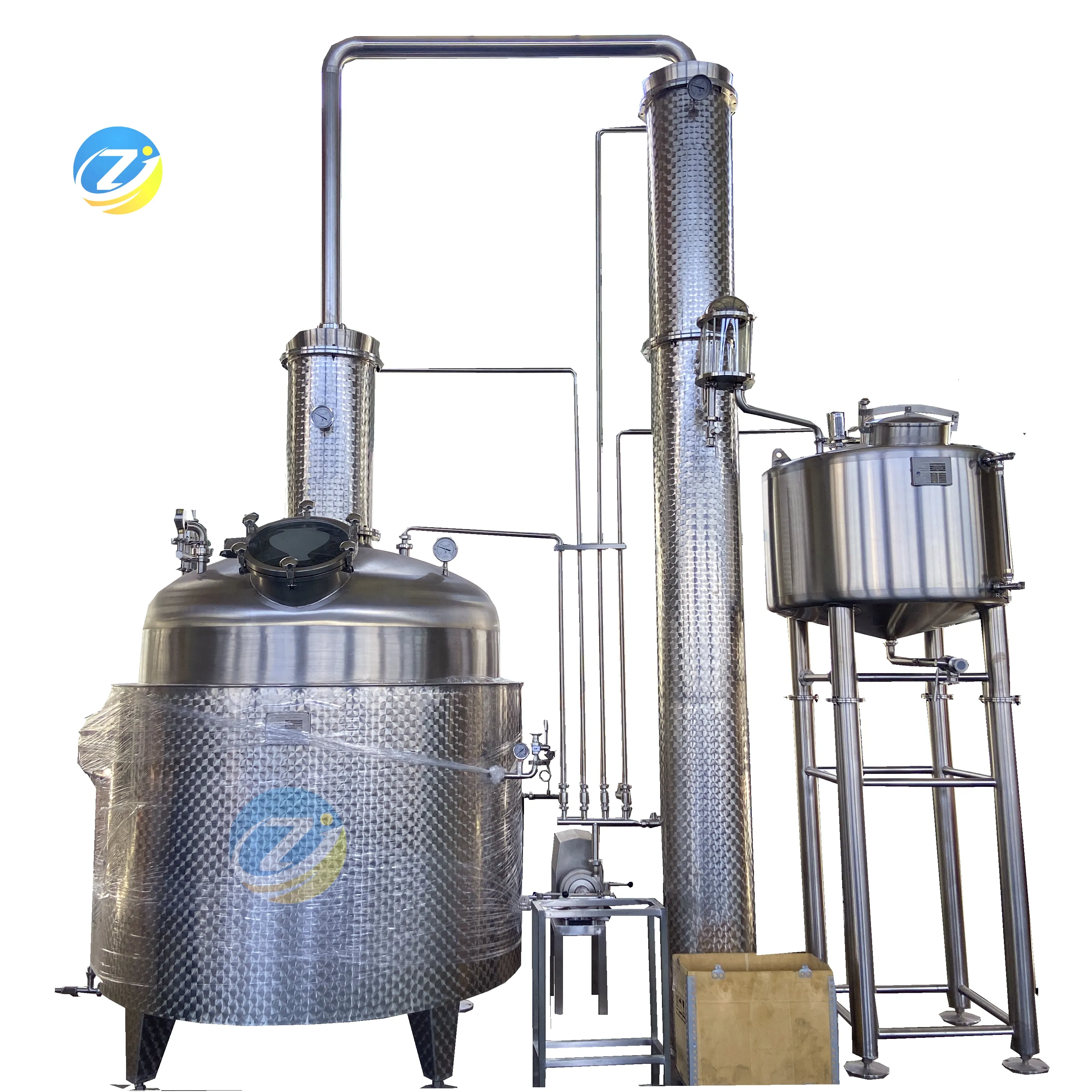
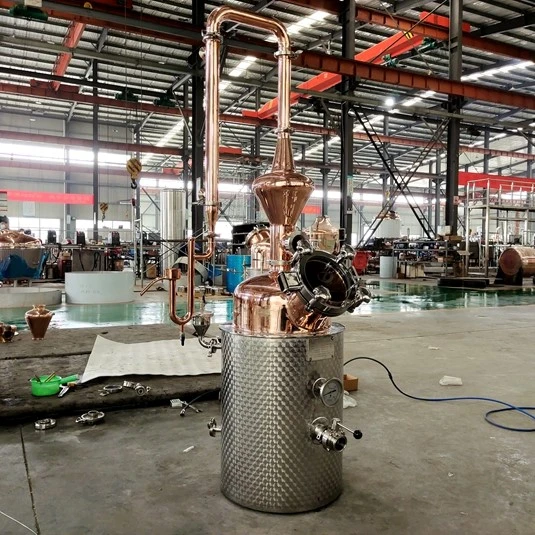
Zhengjiu hybrid systems combine pot and column functions through connected piping and diverter valves, allowing different process paths to be selected for different spirits. Available configurations include craft-scale and larger commercial systems.
Dephlegmator and Reflux Control Stabilize Hybrid Still Performance
Plate count and reflux control must be considered together. A column with several plates will not operate consistently unless the vapor rate and cooling load are properly controlled.
The dephlegmator condenses part of the rising vapor and sends it back down the column. Increasing cooling generally creates more reflux, improving separation and increasing alcohol concentration. Reducing cooling allows more vapor and flavor compounds to continue toward the product condenser.
Operators must balance three variables:
Too much heat can overload the plates and cause unstable operation. Excessive reflux may slow collection and strip away desired aromas. Insufficient reflux can reduce separation and make output strength less consistent.
Flow meters, temperature sensors, sight glasses, and adjustable cooling valves help operators reproduce successful settings across different batches.
Multi-Spirit Batch Planning for Efficient Hybrid Distillery Operations
Equipment flexibility only creates value when the production schedule is realistic. A hybrid distillery must consider fermentation timing, wash availability, cleaning requirements, collection tanks, and product changeovers.
An illustrative weekly schedule may look like this:
| Production Day | Main Configuration | Product |
|---|
| Monday | Pot mode | Whisky stripping runs |
| Tuesday | Partial-column mode | Whisky spirit run |
| Wednesday | Pot or partial-column mode | Rum |
| Thursday | Column mode | Clean gin base |
| Friday | Column plus gin basket | Botanical distillation |
The sequence should reduce unnecessary cleaning and flavor carryover. Neutral or lightly flavored products are often scheduled before strongly botanical recipes. Gin oils can remain in pipework, baskets, seals, and condensers, so sufficient cleaning time should be allowed before switching to a delicate spirit.
Distilleries also need to calculate whether one still can complete all planned runs within the available working hours. Warm-up, distillation, discharge, cleaning, and preparation time must be included. A versatile still cannot compensate for inadequate fermentation capacity or an overloaded weekly schedule.
Condensers, Gin Baskets and Utilities for Different Hybrid Still Modes
When evaluating a hybrid still for sale, buyers should assess the complete production system rather than the pot and column alone.
Important supporting requirements include:
Steam, electric, or thermal-fluid heating capacity
Dephlegmator and product-condenser cooling demand
Fermentation and wash-storage volume
Low-wines and finished-spirit collection tanks
Botanical basket capacity
CIP connections and drainage
Ceiling height and platform access
Pumps, valves, piping, and control instruments
The condenser must be sized for the highest expected vapor load. Cooling demand may differ between pot mode and high-reflux column operation, especially in facilities with warm inlet water.
The pot capacity should also match the normal fermentation batch. A vessel that is too small requires excessive runs, while an oversized pot may operate inefficiently when repeatedly charged below its intended working volume.
Key Specifications When Selecting a Hybrid Still for Sale
Before finalizing hybrid stills, distillers should provide the equipment manufacturer with:
Spirits to be produced
Fermented wash volume and alcohol content
Required output per day or year
Target alcohol strength for each product
Preferred number of distillation stages
Available heating energy
Cooling-water conditions
Workshop dimensions
Required automation level
Expected future expansion
These details determine the appropriate pot capacity, plate count, column diameter, condenser size, valve arrangement, and supporting tanks.
FAQs About Hybrid Stills for Multi-Spirit Production
What is the difference between a hybrid still and a pot still?
A traditional pot still mainly relies on the pot head and vapor path to control passive reflux. A hybrid still adds a plate column, dephlegmator, and selectable vapor routes, allowing the operator to adjust rectification for different spirit styles.
Can one hybrid still produce whisky, rum, gin, and vodka?
A properly configured system can support several spirit categories by changing the vapor route, active plate count, reflux level, and optional botanical section. The final configuration should be selected according to the required alcohol strength and flavor-retention targets.
How many plates should a hybrid pot still have?
There is no universal plate number. Full-bodied whisky and rum may require few or no active plates, while cleaner and higher-proof spirits generally need more rectification. We determine the plate configuration from the planned product portfolio rather than simply recommending the tallest column.
Can the plate column be bypassed?
Yes. A bypass system can route vapor directly from the pot to the product condenser for pot-still operation. It can also direct vapor through all or part of the column when greater separation is required.
Is a hybrid still suitable for a small craft distillery?
A hybrid still can be practical for a craft producer that wants to make several spirits without installing separate distillation systems. Capacity, cleaning time, fermentation output, and the weekly production schedule must still be evaluated carefully.
What should buyers check when evaluating a hybrid still for sale?
Buyers should compare pot capacity, plate count, column diameter, valve arrangement, dephlegmator control, condenser capacity, heating method, cleaning access, and required utilities. The system should also provide clear and safe switching between each operating mode.
Conclusion
A hybrid design allows one distillery to move between flavor-focused pot distillation and controlled column rectification. The most effective system is not defined by the maximum number of plates, but by how well its vapor paths, reflux controls, capacity, utilities, and cleaning procedures support the planned spirit portfolio.
Zhengjiu Machinery can customize a hybrid still with different pot capacities, copper and stainless-steel combinations, plate sections, diverter valves, condensers, gin baskets, heating systems, and control options. Matching these components to actual recipes and weekly batch plans helps create a more efficient and adaptable multi-spirit production line.