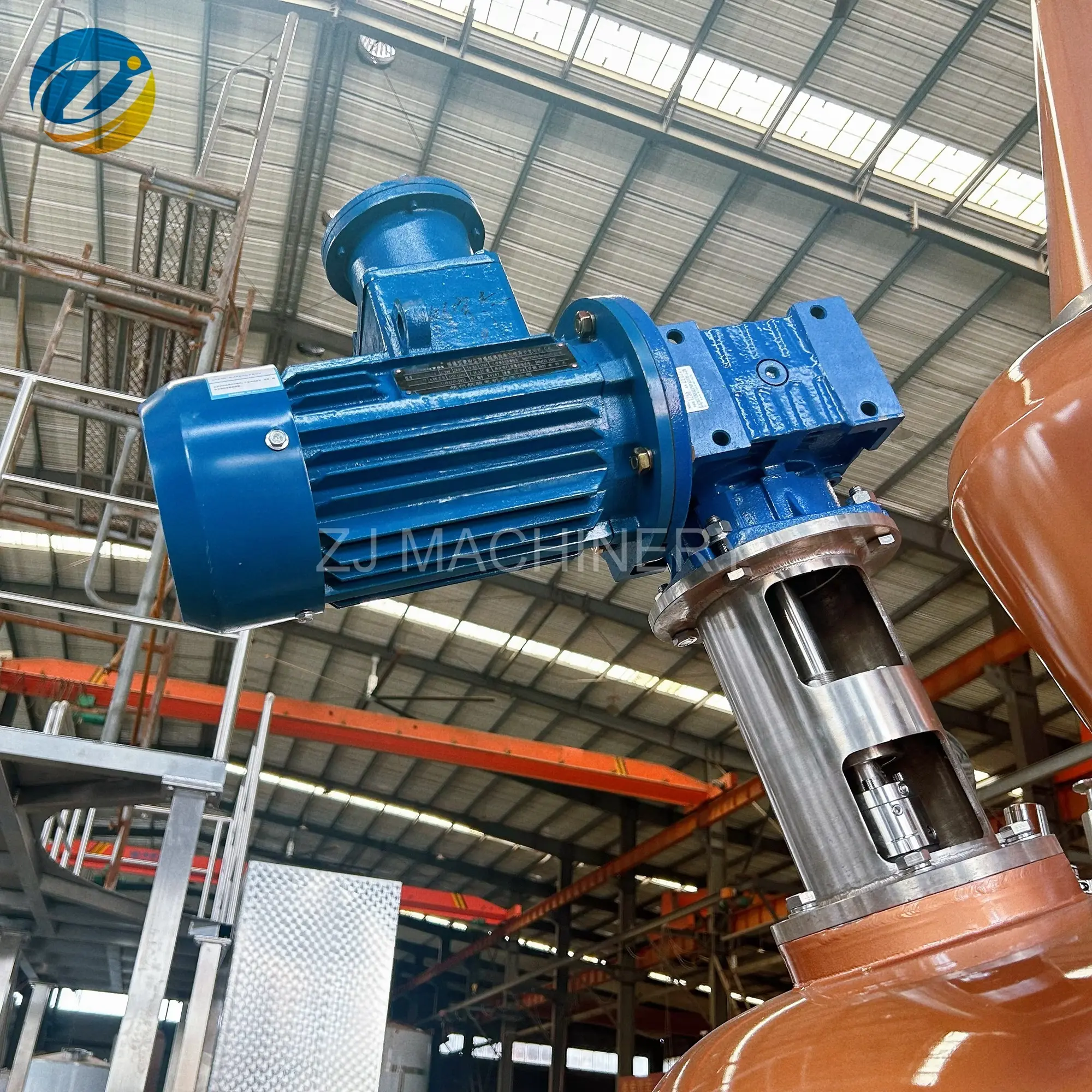
Correctly sizing a mash lauter tun is essential for stable wort separation, predictable extraction, and practical brewhouse scheduling. A vessel selected only by nominal batch volume may be too narrow for the grain load, too deep for efficient lautering, or unable to collect wort evenly across the false bottom.
The appropriate size depends on the maximum grain bill, mash thickness, grain-bed depth, false-bottom area, runoff time, and the range of beer styles planned for production. These factors should be assessed together before the vessel dimensions and internal components are finalized.
Size the Lauter Tun Around the Maximum Grain Load
Brew length alone is not enough to determine vessel size. Two batches producing the same amount of wort can have very different grain loads. A high-gravity beer may require considerably more malt than a standard-strength recipe, creating a deeper and denser filter bed.
Begin with the largest grain bill expected during normal production. The calculation should include:
Maximum dry grain weight per batch
Mash water volume
Grain absorption
Mash expansion
Required freeboard
Additional sparging volume
Expected specialty grains or adjuncts
A vessel sized only for an average recipe may perform poorly when processing stronger beers or grain bills containing wheat, oats, rye, or finely milled material. These ingredients can reduce bed permeability and increase the risk of slow runoff.
Adequate freeboard is also necessary. It provides space for mash transfer, raking, sparging, and temporary changes in liquid level without overflowing the vessel.
| Production Factor | Why It Affects Sizing |
|---|
| Maximum grain bill | Determines the total grain-bed volume |
| Mash thickness | Changes the combined volume of grain and water |
| Beer gravity | Higher-gravity recipes generally require more grain |
| Adjunct percentage | Can affect grain-bed permeability |
| Freeboard | Supports safer transfer, mixing, and sparging |
| Future recipes | Prevents the vessel from limiting product development |
The final grain load should reflect the brewery’s most demanding planned recipe rather than its easiest or most frequently produced beer.
False-Bottom Area Controls Beer Lauter Tun Performance
During lautering, the grain bed becomes the primary filtration medium. The false bottom supports the grain while allowing wort to pass into the collection space underneath. Insoluble grain material forms the filter bed that separates the liquid wort from the mash solids.
The false-bottom area influences:
Grain-bed depth
Pressure across the bed
Wort collection speed
Risk of compaction
Sparging efficiency
Overall lautering time
A wider vessel creates a shallower grain bed for the same grain load. This can support more uniform sparging and reduce resistance during wort collection. A narrow, deep vessel may occupy less floor space but can produce excessive bed pressure and slower runoff.
A basic sizing relationship is:
Required false-bottom area = total grain-bed volume ÷ planned grain-bed depth
The calculation should use the fully hydrated grain volume rather than the dry grain volume. The supplier should also evaluate the vessel diameter, rake design, available floor space, and expected range of batch sizes.
The largest recipe establishes the required capacity, but the smallest routine batch should also be checked. A very shallow grain bed may not form an effective filter layer, making wort clarification more difficult.
False-Bottom Design Supports Stable Wort Separation in Lauter Tuns
False-bottom performance depends on more than its total surface area. Slot geometry, open-flow area, structural support, collection zones, and removal method all affect lautering.
Important design features include:
Wedge-wire or precision-slotted construction
Even support across the vessel floor
Multiple wort collection points
Minimal dead zones beneath the screen
Removable sections for inspection
Under-screen flushing connections
Smooth, hygienic internal surfaces
The openings must retain the grain bed while allowing wort to flow without creating excessive restriction. The grain itself performs most of the fine filtration, so the screen should support the bed rather than act as an extremely fine filter.
Collection from only one outlet can pull wort more rapidly through the surrounding section of the bed. Multiple drain points help distribute the flow across a wider area and reduce the likelihood of localized channeling.
Controlled Wort Collection Keeps the Lauter Tank Stable
The required wort collection rate should be calculated from the pre-boil volume and the available lautering time:
Average wort collection rate = required pre-boil volume ÷ available runoff time
For example, collecting 1,000 liters over 90 minutes requires an average flow of approximately 11 liters per minute. The actual rate will change during recirculation, first-wort collection, and sparging, so this figure should be treated as a planning average rather than a fixed operating setting.
A faster rate does not always produce a more efficient brew day. Excessive suction beneath the false bottom can compact the grain bed, reduce permeability, and eventually stop the runoff. Starting slowly allows the bed to settle and form a stable filter layer.
The operating sequence normally includes:
Allowing the grain bed to settle
Recirculating cloudy wort until acceptable clarity is reached
Beginning controlled first-wort collection
Applying sparge water evenly
Balancing sparge input with wort runoff
Stopping collection at the selected volume or extract limit
Lautering separates sweet wort from the grain, while sparging rinses additional soluble material from the established filter bed.
Rake and Sparging Systems Improve Mash Lauter Tun Efficiency
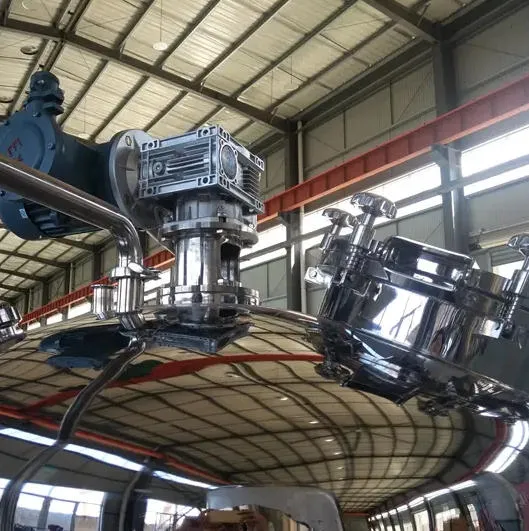
A commercial beer lauter tun may require a rake system when grain loads are large or recipes create a less permeable bed. The rakes can level the mash, control bed depth, and cut compacted layers during runoff.
Rake movement should be slow enough to avoid destroying the filter bed. Aggressive operation can release fine particles and increase wort turbidity.
The sparging system should distribute water across the grain surface without creating channels. Uneven spraying can leave some areas insufficiently rinsed while excessive flow in other areas passes quickly through the bed.
For consistent performance, the following components should work as one system:
Variable-speed rake mechanism
Height-adjustable rake arms
Even sparge-water distribution
Multiple wort outlets
Sight glass for runoff observation
Flow-control valves or meters
Temperature measurement
CIP spray devices
The collection manifold must also be sized for the expected flow. Installing a large outlet does not guarantee faster lautering when the grain bed itself is the main restriction.
Evaluate a Lauter Tun for Sale
Before selecting a lauter tun for sale, buyers should provide the manufacturer with complete process information rather than only the desired batch volume.
Useful project details include:
Finished brew length
Maximum and minimum grain bills
Mash thickness
Highest target original gravity
Expected lautering time
Malt and adjunct types
Milling specifications
Available workshop dimensions
Required automation level
CIP and spent-grain removal method
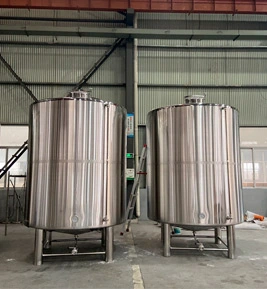
Zhengjiu Machinery manufactures stainless-steel lauter tuns with a wedge-wire false bottom, multiple wort drain ports, PT100 temperature measurement, under-screen flushing ports, CIP spray devices, and removable screening components. The vessel diameter, working volume, grain-bed area, and collection arrangement can be adapted to the brewery’s recipes and production schedule.
FAQs About Mash Lauter Tun Sizing and Operation
What is the difference between a mash tun and a lauter tun?
A mash tun mixes crushed grain with water to convert starches into fermentable sugars. A lauter tun separates the sweet wort from the grain bed and supports sparging. A mash lauter tun combines both functions in one vessel.
How is mash lauter tun capacity calculated?
Capacity should be based on the maximum grain bill, mash-water volume, hydrated grain volume, freeboard, and intended grain-bed depth. The highest-gravity recipe normally establishes the required working volume.
Why is false-bottom area important in a beer lauter tun?
The false-bottom area influences grain-bed depth, runoff resistance, sparging uniformity, and lautering time. A wider area generally creates a shallower bed, while a narrow vessel can produce greater bed resistance for the same grain load.
What causes a stuck runoff in a lauter tank?
Common causes include excessive collection speed, a compacted grain bed, fine milling, high percentages of wheat or oats, uneven wort drainage, and inadequate rake operation. Starting the runoff gradually and balancing sparge-water input can reduce the risk.
Do all lauter tuns require a rake system?
Small vessels and highly permeable grain bills may operate without complex rakes. Larger commercial lauter tuns often benefit from adjustable rakes for leveling the bed, controlling compaction, and supporting spent-grain removal.
What information should be provided when requesting a lauter tun for sale?
Please provide the finished brew length, maximum and minimum grain bills, mash thickness, target original gravity, expected runoff time, grain and adjunct types, workshop dimensions, and required automation. These details help us determine the vessel diameter, false-bottom area, outlet arrangement, and rake configuration.
Conclusion
Effective lauter tun sizing begins with the maximum grain load, not simply the nominal beer output. The vessel must provide sufficient working volume and freeboard while maintaining a suitable grain-bed depth across the false bottom. The screen, wort outlets, rake system, and sparging arrangement must then support even flow without compacting or channeling the bed.
Zhengjiu Machinery can customize a mash lauter tun according to grain load, batch volume, runoff target, workshop layout, and cleaning requirements. Matching the vessel dimensions and wort collection system to actual brewery recipes helps improve separation efficiency and maintain a more predictable brewhouse schedule.

.webp "What is the Beer Fermenter of Beer Equipment?")